How to Improve Your Website SEO: Practical Tips
Business owners want more people to discover their websites. But where should you start with website promotion? This article introduces practical steps for making your content easier to find and use.
You can learn the basics and manage some website promotion yourself. If you are new to SEO, specialist support can help you save time and set priorities. Working with an agency does not guarantee a particular search position.
SEO is one way to attract visitors to a website. Search systems evolve, so it is useful to review your approach and improve your content over time.
This article covers 5 ways to improve your website yourself.
Create Useful, Well-Structured Pages
Effective website promotion starts with pages and articles that serve a clear purpose for their readers.
Use descriptive titles and relevant search terms, and publish original content that answers your audience’s questions. Add images, video or tables when they help explain the subject, rather than treating every format as a requirement.
One example for keyword research is Yandex Wordstat.
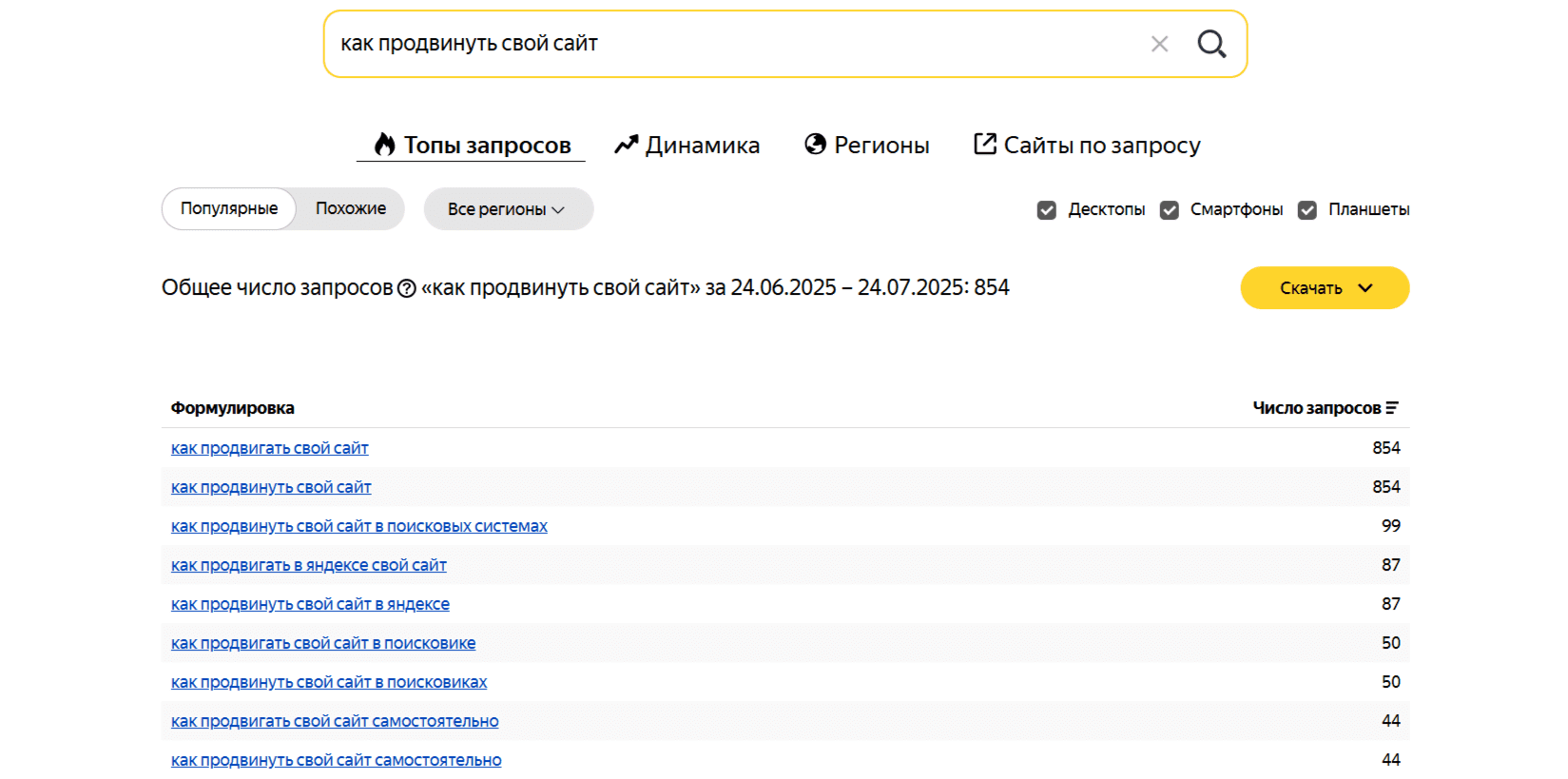
Use the example to understand how people phrase their searches. For an international audience, check that the research tool and its data cover the language, country and search engine you intend to target.
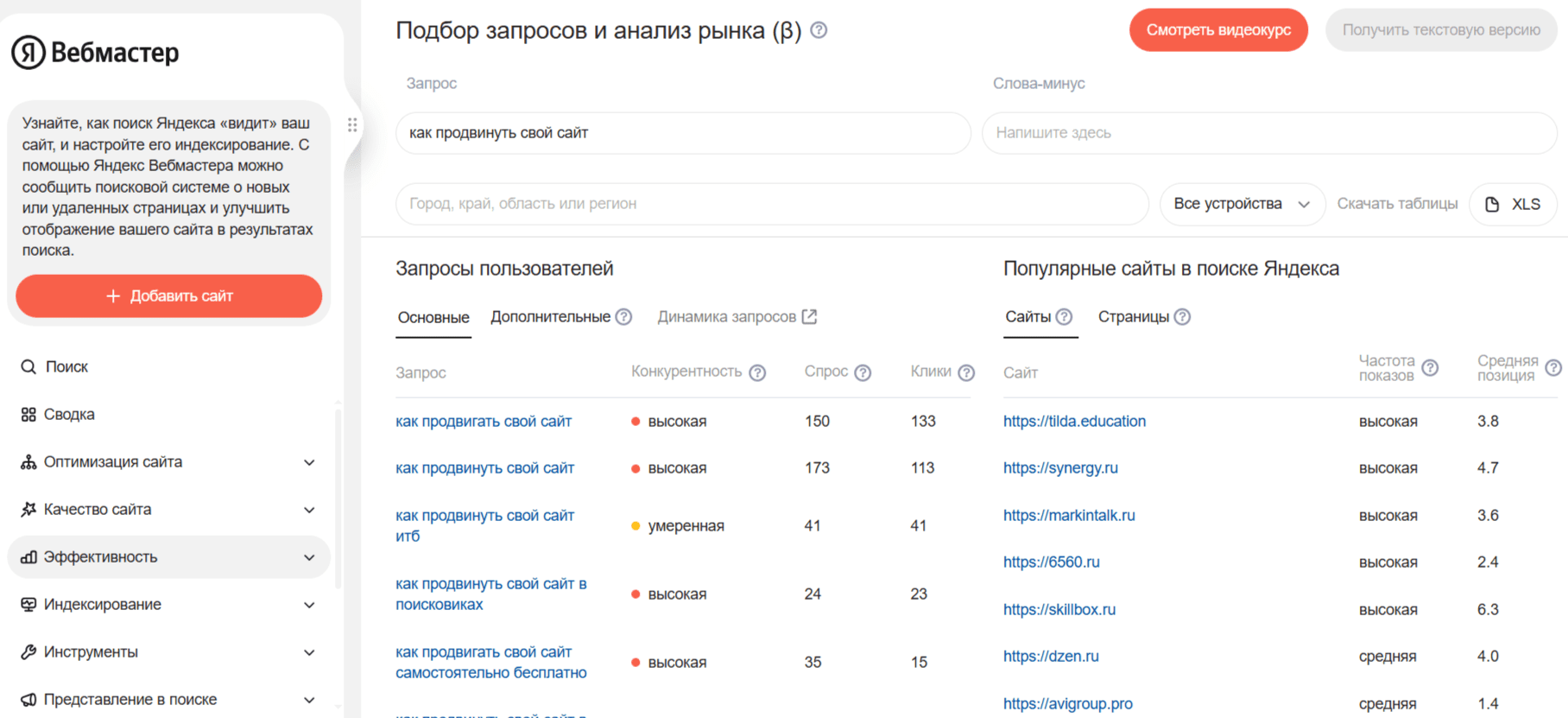
Identify relevant search terms, use them naturally and write useful content of your own.
Write Clear Titles, Descriptions and Headings
Review both search metadata and the headings that organize the page:
- The page title;
- The meta description;
- Section headings, such as H2 to H6, which structure the visible content rather than serving as meta tags.
The following screenshot shows an editing example in WordPress.

Write a clear title and description, then review the images and video used on the page. A table of contents can help readers navigate a longer article.
Write a description that accurately summarizes the page and helps people decide whether it answers their question. Avoid treating the description as a guarantee of clicks or rankings.

Use Descriptive URLs and Clear Navigation
For new pages, choose a readable URL path that reflects the subject. The example below shows a page about writing SEO content. Review existing URLs carefully before changing them, because other pages may already link to them.

A descriptive address is easier for readers to understand than an unexplained sequence of characters. Keep the address consistent with the content of the page.
A clear site menu also helps visitors find related information and understand what you offer.
Connect Related Pages with Internal Links
Link to relevant articles elsewhere on your own website. These internal links help visitors explore a topic and show how your pages relate to one another. They are different from backlinks from other websites.


Review the Technical Experience
Useful content still needs a website that works well. Review loading speed, mobile usability and basic technical issues alongside the content itself. Paid advertising does not remove the need to maintain the site.
You can handle some improvements yourself or work with specialists. Our marketing agency can help you plan website promotion and discuss your questions.
You can explore more of our marketing articles.