Automated sales funnels: what are they?
A sales funnel describes a prospective customer’s journey from the first interaction to a purchase. A simplified version looks like this:

An advertising campaign introduces your business to people who may then interact with it. At each stage of the funnel, a person chooses whether to take the next action.
For example, someone sees an advertisement for paid search management and visits the website. The site offers a free target-audience analysis in exchange for contact details. The person accepts, receives the analysis and then speaks with a manager. Another decision follows: proceed with the service or decline it. If they place an order, they have said yes at every stage. This is an example of a complete journey; real customer journeys do not always follow that pattern.
How does an automated funnel differ from a simple linear funnel? If someone does not take a particular step, an automated sequence can offer a different relevant next step. This creates another opportunity to continue the conversation, without assuming that every visitor will become a customer.
Automation is the central feature. The sequence responds to a person’s actions and uses predefined rules to decide which offer or message to show next.
Automated sales funnels: key components
- A strategy that takes prospective customers’ needs into account;
- An understanding of the market;
- Attention to the conditions in that market.
Automated sales funnels: planning the stages
- Initial awareness. Give people a useful reason to pay attention, such as a checklist of ways to attract customers;
- Learning about the topic. The prospective customer reads or watches your material;
- Recognising a problem. The person understands that a problem exists but may not yet intend to solve it. A story or video about someone else’s experience can help explain the issue. For example: ‘How could working remotely change your day-to-day life?’;
- Developing an interest. The person starts asking how to solve the problem. Relevant, useful content can support this stage, such as a free analysis of their target audience;
- Considering an approach. The customer is comparing categories of solutions rather than a particular product. Explain how your company’s approach differs from the alternatives;
- Forming an intention. The prospective customer begins to feel that an offer fits their needs. A timely message, discount or relevant proposal may influence that decision;
- Evaluating the options. Having chosen a category, the customer compares the available products or services;
- Choosing a preferred offer. The customer identifies the option they prefer;
- Making a purchase;
- Developing loyalty. A positive experience with your company can give the customer a reason to return;
- Recommending the business. A satisfied customer may buy again and recommend the company or its products to others.
Automated sales funnels: setup and launch
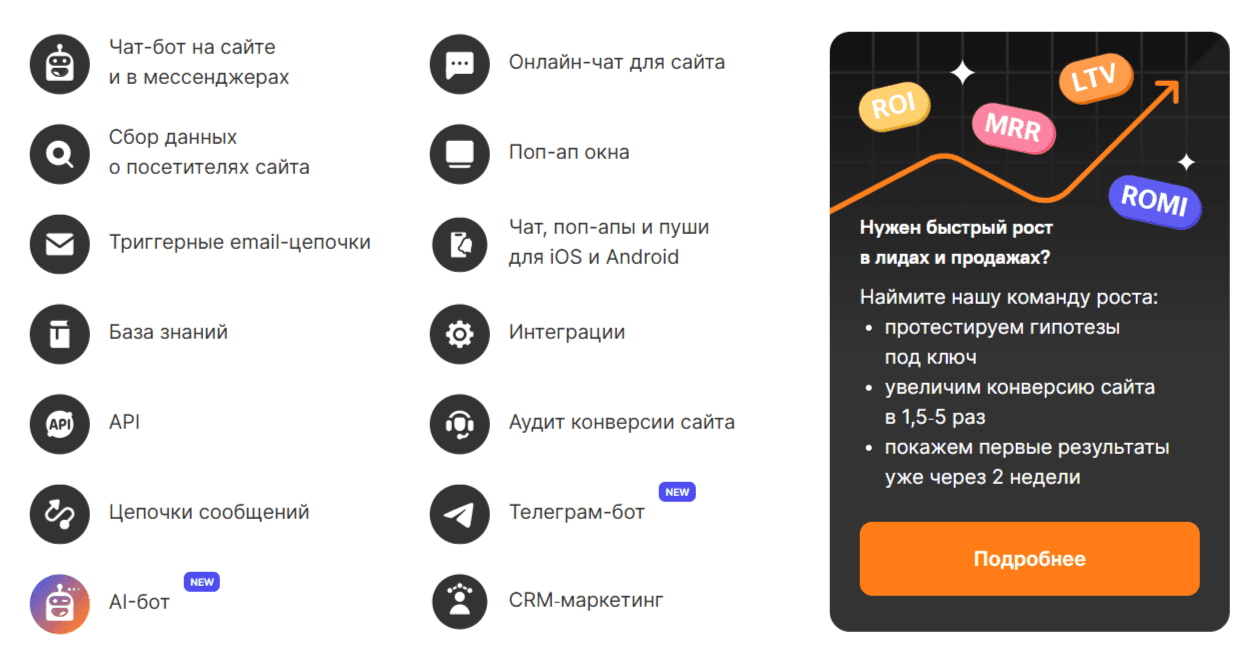
You can present messages and offers through:
- Behaviour-triggered chat messages;
- Chatbots;
- Pop-ups;
- Triggered email messages.
These types of tools are available in Carrot quest. Funnel scenarios provide a starting point for planning a sequence that fits your business and audience.
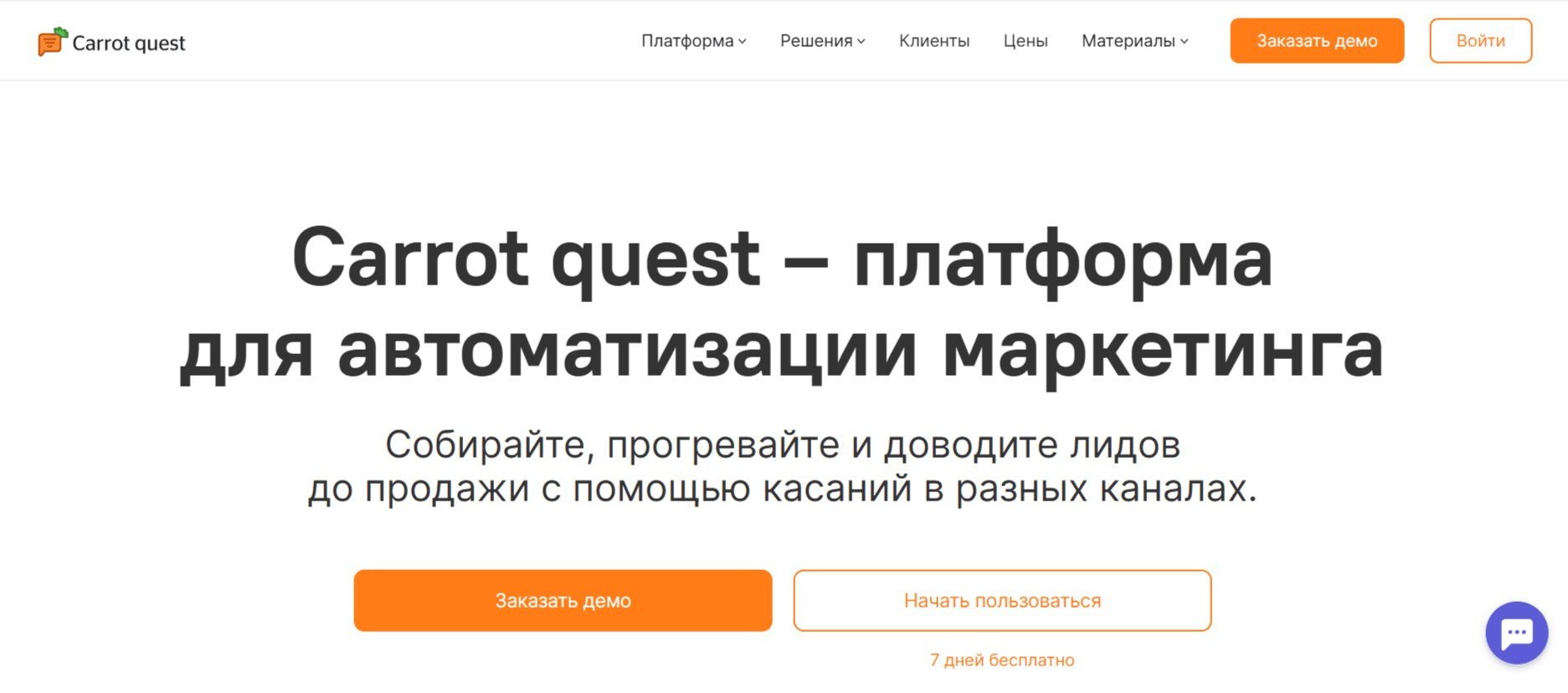
To support audience segmentation, tailored sequences and performance analysis, Carrot quest also provides:
- Data tracking;
- Funnel analytics and integrations with external analytics systems.
If you have questions, our agency can help you plan your approach. Read more articles from our agency.